

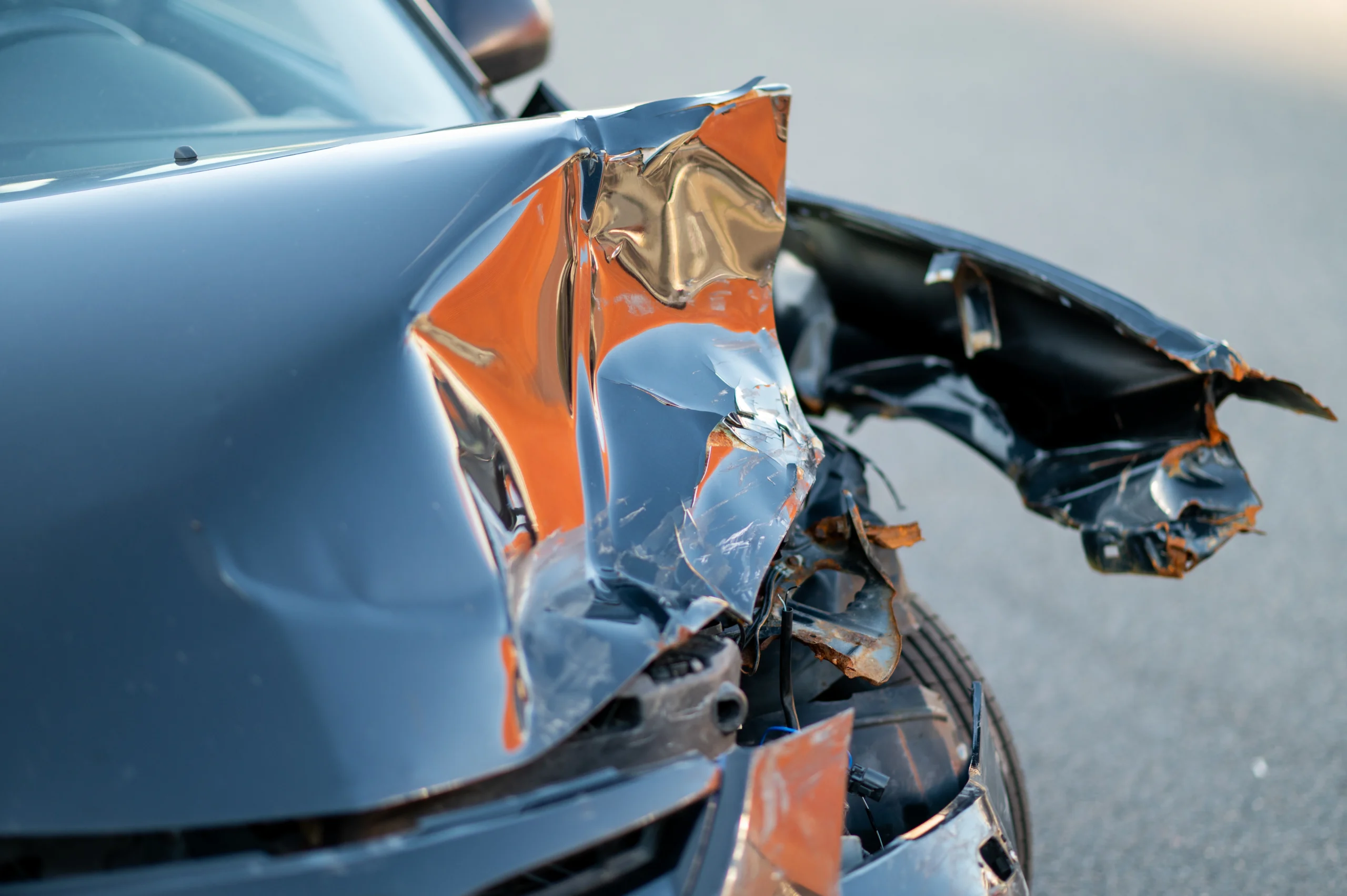
A driver drifts across a lane line without checking a mirror. In the space of a second, two vehicles traveling side by side scrape together at highway speed, and what looks like a minor “fender-bender” on the surface can send one or both cars spinning into a guardrail or oncoming traffic. Our Athens sideswipe accident attorneys represent drivers hurt in these collisions and push back against insurers who try to treat sideswipe claims as minor.
Sideswipe crashes carry a reputation problem. Because the initial contact is often just paint and plastic, insurance companies frequently open with a lowball offer before medical treatment is even finished. An experienced Athens car accident lawyer knows how these crashes actually unfold, and how to document the difference between a scraped bumper and a genuinely serious injury claim.
How a Sideswipe Crash Actually Unfolds on Athens Roads
Most sideswipe crashes start the same way: a driver eases into an adjacent lane, certain the space is clear, and discovers otherwise the instant metal meets metal. The contact rarely lasts more than a fraction of a second, but it happens along an extended stretch of both vehicles rather than at a single point, which is part of why these crashes may not look bad but reveal much more serious damage once a body shop pulls a panel apart.
On Athens roads, that moment tends to happen in one of two settings. The first is a same-direction drift: a driver merging onto Loop 10 from an on-ramp misjudges the gap in the lane they’re entering, or a driver changing lanes on Atlanta Highway near the retail corridors simply never checks a mirror before moving over. Both vehicles are traveling roughly the same speed and direction, so the damage tends to run in a long scrape along the door panels and quarter panels rather than a single dented point of impact.
The second, less common but more severe, is an opposite-direction sideswipe. A driver crosses the centerline on a two-lane road like Lexington Road or College Station Road, perhaps correcting for a pothole or reaching for a phone, and clips an oncoming vehicle without striking it head-on. Because the vehicles are closing on each other rather than moving in parallel, the combined speed at the moment of contact is far higher, and what looks like a glancing blow can still generate enough force to send a car off the roadway entirely.
A third variation shows up constantly near the University of Georgia campus and downtown Athens: stop-and-go traffic where a driver tries to gain a few car lengths by drifting between lanes without fully committing to either one. These low-speed sideswipes cause less dramatic damage, but they’re just as capable of producing a real injury claim, and insurers routinely underestimate them for exactly that reason.
Which category a crash falls into matters well beyond curiosity. It shapes what evidence exists (a same-direction merge crash on the interstate is more likely to have traffic camera coverage than a rural two-lane crash), what statutes apply, and how aggressively an insurer is likely to dispute fault.
Why Sideswipe Accidents Are More Dangerous Than They Look
The initial impact in a sideswipe crash is often glancing rather than square, which is exactly why these accidents get underestimated. But the danger in a sideswipe rarely comes from that first point of contact. It comes from what happens in the next two or three seconds.
A car struck along its side at highway speed can be pushed abruptly toward a guardrail, a shoulder, or an adjacent lane still full of traffic. Drivers instinctively overcorrect, which can send a vehicle into a spin, roll it if it catches a curb or shoulder edge at the wrong angle, or launch it directly into the path of another car. Multi-vehicle pileups on Loop 10 and the Athens Perimeter frequently trace back to an initial sideswipe that triggered a chain reaction, rather than to the more obvious head-on or rear-end impacts that get more attention.
The occupants themselves are also at real risk from that initial contact. A side-impact from a sideswipe, particularly one involving a larger vehicle like a pickup truck or SUV striking a sedan, can cause shoulder and arm injuries from bracing against the door, whiplash from the sudden lateral jolt, and, in more severe cases, broken bones if the vehicles remain in contact and grind along each other’s length rather than separating quickly. Because there’s often no dramatic point of full impact the way there is in a head-on crash, victims and even responding officers sometimes underdocument these injuries at the scene, which is precisely when a lower settlement offer tends to follow.
Common Causes of Sideswipe Accidents in Athens
Nearly every sideswipe crash comes down to a driver failing tomake sure a lane is clear before moving into it. The recurring patterns include drivers changing lanes without checking a mirror or blind spot, particularly on multi-lane stretches of Atlanta Highway and Loop 10 where traffic volume makes blind spots harder to clear safely. Georgia law requires drivers to signal before changing lanes and to ensure the movement can be made safely, and a driver who fails to do either is typically found at fault when a collision results.
Distracted driving plays an outsized role in these crashes specifically because sideswipes require constant peripheral awareness that a glance at a phone eliminates entirely. A driver texting or checking a notification for even a couple of seconds while drifting toward a lane line has no chance to correct before contact.
Drowsy driving produces a similar pattern on longer stretches of road heading out of Athens, where a driver’s attention lapses just long enough for the car to drift out of its lane. Aggressive lane-splitting in heavy traffic near campus and downtown, weaving between vehicles to gain position, creates situations where a driver misjudges a gap that simply isn’t there. And impaired driving remains a factor in a meaningful share of these crashes, since alcohol and drugs degrade the fine motor control needed to hold a car steady within its lane.
Who Is At Fault in a Sideswipe Accident?
In most same-direction sideswipe cases, fault falls on the driver who moved out of their lane, since Georgia law places a clear duty on a driver to confirm a lane change can be made safely before making it. Physical evidence tends to make this determination more straightforward than in many other crash types: paint transfer marks, the direction of scrape patterns along each vehicle’s side panels, and the final resting position of both cars often show clearly which vehicle drifted into the other’s path.
That doesn’t mean fault is always uncontested. Insurance adjusters sometimes argue that both drivers share blame, particularly when there’s no independent witness or dashcam footage and the story comes down to one driver’s word against the other’s. Georgia’s modified comparative negligence rule allows you to recover compensation as long as you’re found less than 50% responsible, with your award reduced by your share of fault. If a claim is valued at $60,000 and you’re assigned 15% of the blame, your recovery would be reduced to $51,000, which is exactly why contesting an inflated fault percentage matters even in cases where liability seems clear.
What to Do After a Sideswipe Accident in Athens
What you do in the hours and days after a sideswipe crash has a direct effect on whether your claim gets taken seriously. Because the damage can look minor at first glance, these are the steps that make the difference between a fair settlement and a lowball offer:
- Move to safety if you can. If your car is still drivable and blocking traffic, get it to the shoulder or a nearby parking lot before doing anything else. If you can’t move safely, stay put and turn on your hazards.
- Call 911 and request an officer. A police report creates an independent record of the crash, including statements from both drivers, and it often documents the physical evidence, damage patterns, and debris field before anything gets cleaned up or moved.
- Photograph everything, not just the obvious damage. Capture the full length of the scrape or scratch along both vehicles, the lane markings at the scene, the final resting position of both cars, and any skid marks or debris on the road. Sideswipe damage photographs poorly from a distance, so get close-up shots of the paint transfer and panel deformation as well as wider shots showing the scene.
- Exchange information, but don’t discuss fault. Get the other driver’s license, insurance, and contact information. Stick to the facts if a police officer asks what happened, and avoid speculating about who was at fault, since even a well-intentioned apology can be used against you later.
- Get checked out, even if you feel fine. Adrenaline masks pain, and injuries like whiplash or soft tissue damage from bracing against a door often don’t show up until a day or two later. A same-day or next-day medical evaluation creates a documented link between the crash and your injuries.
- Get a written repair estimate, not just a quick look. Because sideswipe damage frequently involves structural components hidden beneath the door panel, insist on a full written estimate from a body shop rather than a visual guess, since that documentation becomes evidence of how serious the impact actually was.
- Be cautious with the other driver’s insurance company. An adjuster may call within a day or two asking for a recorded statement. You’re under no obligation to provide one, and anything you say can be used to minimize your claim before you’ve even finished treatment.
- Talk to an attorney before signing anything. Insurance companies frequently extend an early settlement offer on sideswipe claims specifically because the visible damage looks small. Speaking with an attorney before accepting anything preserves your ability to pursue the full value of your claim once your medical treatment is complete.
Contact Our Athens Sideswipe Accident Lawyer
If you were hurt in a sideswipe collision on Loop 10, Atlanta Highway, or anywhere else in the Athens area, don’t let an insurance company decide your claim’s value before you’ve even finished treatment. Georgia gives injury victims two years from the date of the crash to file a lawsuit, but the physical evidence that proves your case fades much faster than that.
Contact Ruppersburg Injury Law for a consultation with an Athens sideswipe accident lawyer.


